2026-03-06


As AI large models advance, AI computing centers are becoming the core engine of the digital economy. However, the leap in computing power presents unprecedented challenges to underlying infrastructure – the power density per rack is jumping from traditional kilowatts to tens or even hundreds of kilowatts, stretching conventional power architectures to their limits.
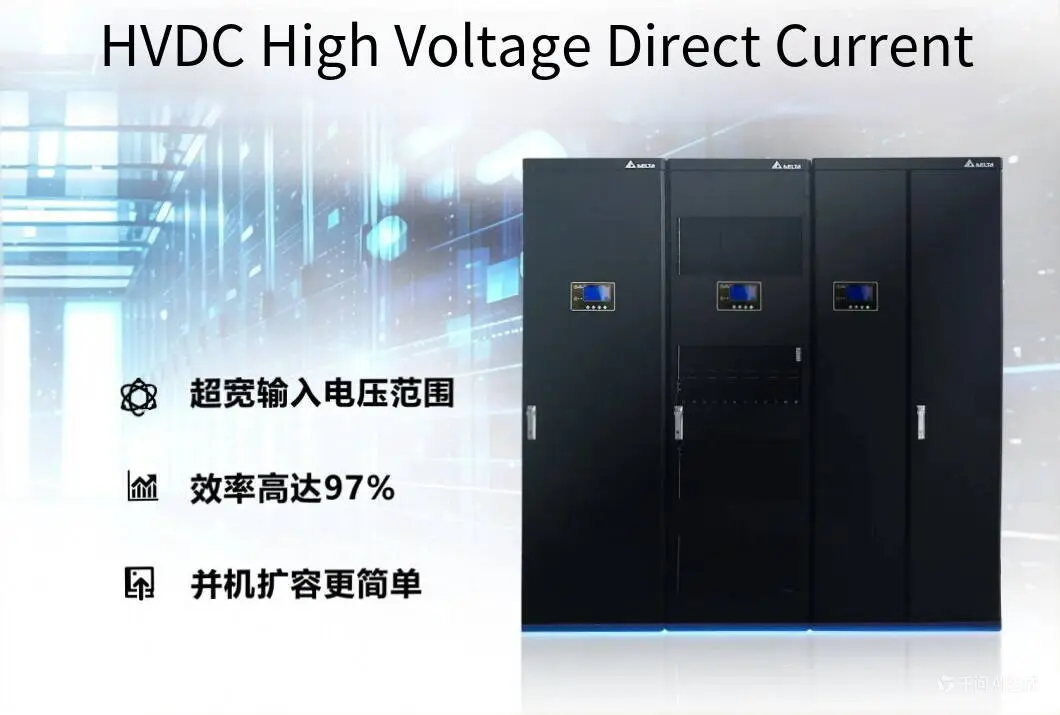
With the centralized deployment of AI chips, how can power supply meet these extreme demands? Recently, in an ultra-large AI computing center power project in Shandong, Delta adopted an innovative “battery direct-connected to busbar” architecture and a customized high-density design. Using a tailored 380V DC HVDC system, Delta has set a benchmark for reliable power supply in environments with concentrated AI chip deployment.
The Unbearable “Weight” of Traditional Architectures
This ultra-large AI computing center in Shandong is a strategically positioned high-performance computing hub, handling AI model training, scientific supercomputing, and other high-density computing workloads. The overall power supply scale is immense, demanding full-capacity output, extreme-condition reliability, and lifecycle energy performance far exceeding industry standards. Conventional utility + UPS AC power architectures or ordinary HVDC systems fall short in power capacity, reliability, and space efficiency:
Power density ceiling: Standard HVDC systems typically support battery input power of 200-400kW and current of 800-1200A, unable to meet this project’s requirement of 720kW per unit and 1800A.
Power fluctuations from AI loads: AI training loads fluctuate dramatically – GPU load can spike from 10% to 100% within 0.1 seconds. UPS switching introduces a 5-20ms delay and cannot smooth instantaneous surges, leading to voltage instability or even computing downtime.
Multi-stage conversion hurts efficiency and space: AC power architectures require multiple AC/DC conversions, reducing overall efficiency. They also need separate battery rooms and inverter cabinets, consuming valuable floor space – inefficient in both energy use and footprint.
Delta’s Solution: Re-architecting for Ultra-High Density Computing
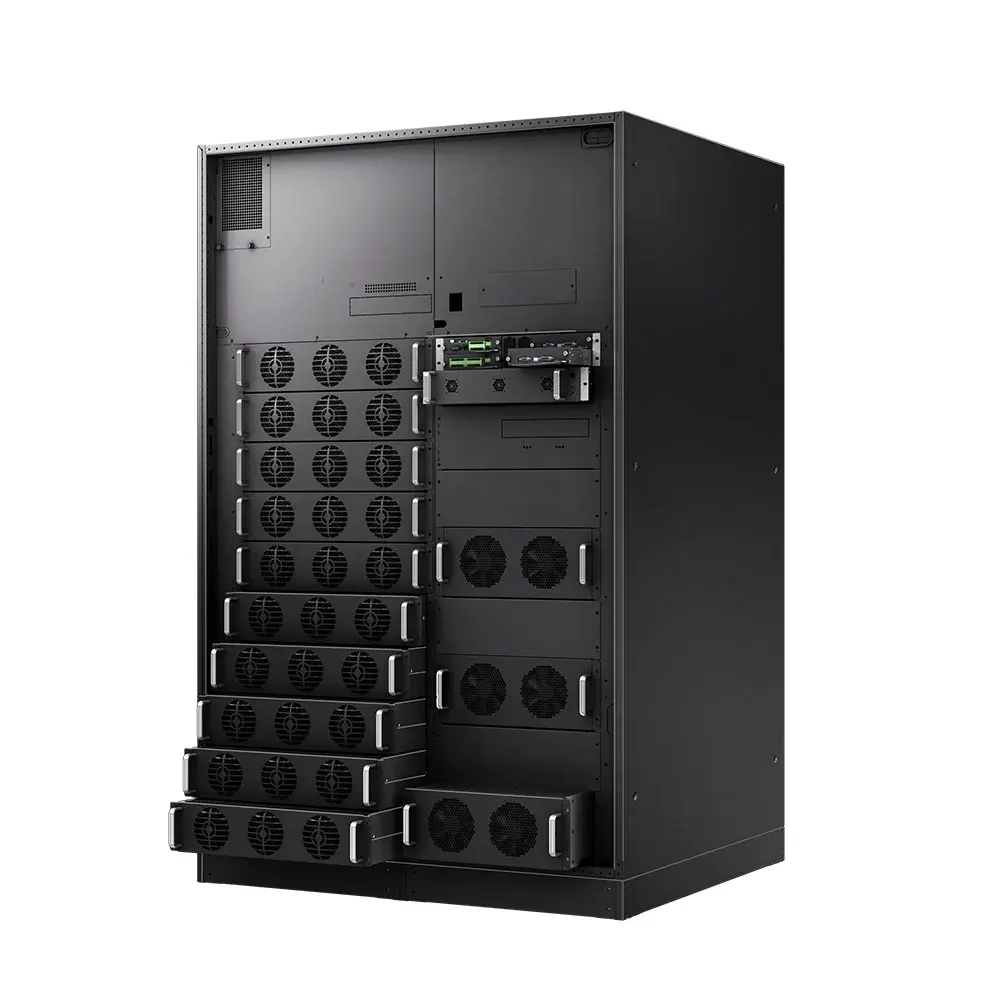
To tackle these extreme challenges in AI computing center power, Delta abandoned traditional approaches and custom-built six 380V DC HVDC systems. The core advantage lies in the customized 720kW DC busbar direct-connected energy storage system. Compared to ordinary HVDC, this solution offers four fundamental differentiators and leaps forward:
Four Core Advantages – Leading Green Computing Power
Compared to traditional power architectures, Delta’s customized HVDC solution not only surpasses technical performance but also sets new benchmarks in economic and ecological value:
1. Efficiency Leadership: 98% System Efficiency, Over CNY 1 Million Annual Electricity Savings
Traditional utility + UPS systems operate at about 95% efficiency. By eliminating the inversion stage, Delta’s HVDC solution achieves 98% total efficiency. At a 720kW load, this saves over CNY 146,000 per cabinet per year – for six cabinets, total annual savings exceed CNY 876,000.
2. Ultimate Reliability: Battery Direct-Connected to Busbar – “Zero Switching” Uninterruptible Power
Supercomputing servers tolerate <1ms power interruption; traditional UPS switching carries delay risks. In this solution, the battery remains online and continuously floating, so when utility power fails, there is no switching – power is uninterrupted with zero break, meeting the high-availability demands of financial-grade and AI training-grade computing.
3. Modular Design: Flexible Expansion and Redundancy
The “6 × 1800A” parallel architecture ensures that a single cabinet fault does not affect system operation. N+1 redundancy is easily achieved. When future computing upgrades are needed, simply add rectifier/battery cabinets – no need to redesign the power distribution architecture, lowering total cost of ownership (TCO).
4. Space and Cost Optimization: 40% Less Footprint, 30% Lower Construction Cost
Traditional UPS requires separate battery rooms, inverter cabinets, and distribution cabinets. This solution integrates into a two-cabinet system (rectifier + battery), saving about 40% of computer room space. According to the 2025 Data Center Power Electronics Report, HVDC architecture can reduce initial construction costs by 15–30%, especially for high-density racks (>15kW/rack).
Conclusion
In an era where computing power equals productivity, the strength of the power system directly determines the pace of AI iteration. In this ultra-large AI computing center project, Delta’s breakthrough “battery direct-connected to busbar” and “ultra-high-power custom” approach achieves a perfect fusion of zero interruption, space savings, and 98% high efficiency. This is not just an innovation over traditional power solutions – it sets a new benchmark for AI computing centers moving toward high reliability, low PUE, and a zero-carbon future. Going forward, Delta will continue to deepen its focus on computing infrastructure, using innovative power architectures to safeguard every leap in computing power in the digital age.