2026-03-06


In 2026, “Computing-Power-Electricity Synergy” was written into the government work report for the first time, quickly becoming a trending topic. This is not just a policy keyword, but a real-world challenge:
As AI computing power explodes, can our power systems keep up?
One key technology — 800 V DC — is moving from behind the scenes to center stage, seen as a core technical pathway to resolve the “disconnect between computing and electricity.” Vertiv is making deep inroads, providing a vivid illustration of the “Computing-Power-Electricity Synergy” era through pragmatic exploration.
Recently, Vertiv deeply participated in the “2026 Open AI Infra Summit” hosted by the GCC-Open AI Infra (OAII) community. At the “800V Power Distribution Sub-Forum,” Vertiv delivered a keynote speech titled “Integrating the Full Link, Elastically Toward the Future: Vertiv Builds the Next-Generation Data Center Energy Foundation,” deeply analyzing the core value and implementation path of 800 V DC technology in the era of computing-power-electricity synergy.
Traditional data center power supply follows a static “design-oriented” model – like equipping a computer with a fixed-power power supply. But when AI servers become “energy monsters” – with single GPU power exceeding 1000 watts and racks moving toward megawatt levels – the old model gets stuck: high power losses, complex systems, and an inability to respond to real-time fluctuations in computing power.
The core of “Computing-Power-Electricity Synergy” is not just a new concept, but a capability: allowing the power system to respond dynamically, just like computing power itself.
In other words: electricity is no longer a static resource, but a “fundamental capability” that can be dispatched in real time as computing power fluctuates. This means the power architecture must evolve: fewer conversions, higher efficiency, and on-demand adaptability.
High-voltage DC technology, especially 800 V DC, stands out in this context as a key enabler supporting a dynamic architecture.
The electrical world has a simple rule: raising voltage significantly reduces current, thereby lowering losses and cable costs.
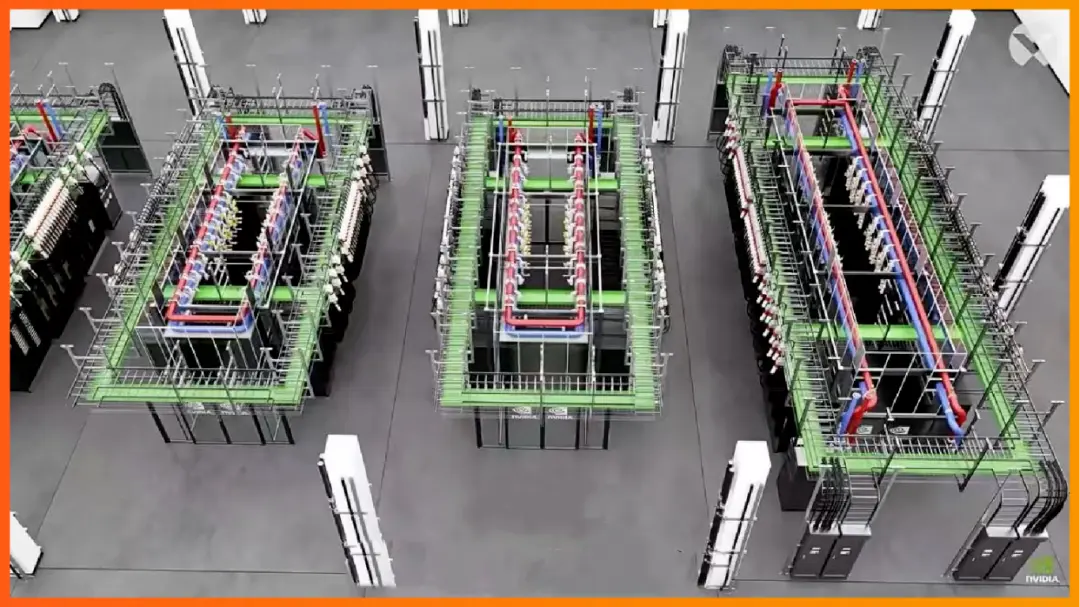
Moving from 400V AC to 800 V DC is not a simple numbers game, but a structural upgrade. For future AI data centers, an 800V architecture can significantly reduce current stress at high power levels, improve overall efficiency, and better align with the next-generation AI data center blueprints laid out by giants like NVIDIA. It is not just a technical choice; it is an inevitable path to cope with soaring computing density.
Ideals are ambitious, but implementation is not easy. The large-scale adoption of 800 V DC faces three major hurdles. Despite the challenges, pioneering exploration and practical verification have never stopped. Vertiv has decades of deep experience in the DC power field, with strong technical expertise and R&D capabilities. Its DC power products are widely used globally, accumulating DC power experience across various scenarios. The safety design, deployment, and operation of its products have earned high recognition from customers.
Facing the application trend of 800 V DC, Vertiv’s forward-looking innovation vision remains highly aligned with NVIDIA’s technology roadmap, and Vertiv is putting theory into practice — validating the implementation path of 800 V DC in real projects.
In a verified scenario with single-rack power exceeding 220kW, Vertiv deployed an 800 V DC system covering the full link from centralized power distribution to rack-level distribution to server DC/DC. Key aspects such as safety, grounding, protection, and CDU selection were successfully validated, providing real-world data support for the large-scale deployment of 800 V DC.
“Computing-Power-Electricity Synergy” is both a national strategy and an inevitable path for industrial upgrading. And 800 V DC, while seemingly just a voltage upgrade, represents a fundamental infrastructure reconstruction supporting the digital world.
When computing power becomes the “productivity” of the new era, the power system must also evolve into the “means of production” that matches it. Paying attention to these changes is essentially paying attention to the foundation of our future digital lives.