2026-03-06


On March 28, Delta, Hanteng Technology, and Loongson jointly announced the launch of a containerized SST (Solid-State Transformer) DC mobile AI computing center at Delta’s Wujiang manufacturing base. This new solution leverages Delta’s SST solid-state transformer as its core energy backbone, deeply integrating CPUs, AI accelerators, and server hardware to deliver a full-stack computing infrastructure solution from grid to chip.
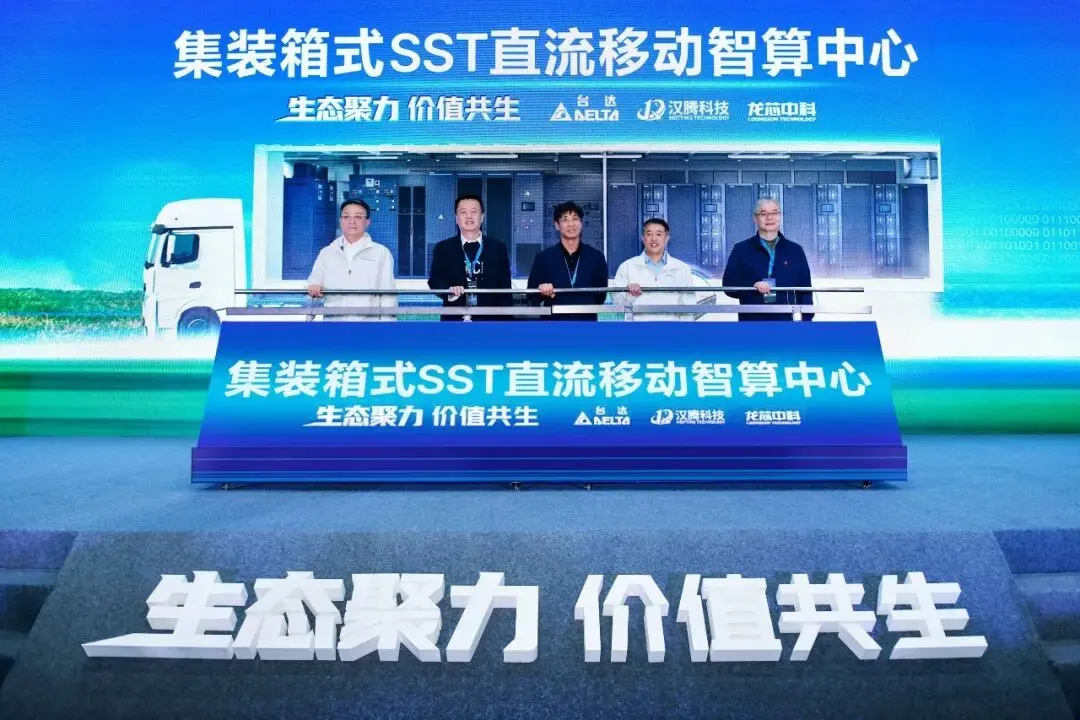
The containerized SST DC mobile AI computing center utilizes an 800V DC power architecture, achieving end-to-end energy conversion efficiency exceeding 98.5%. With its “plug-and-play” agility, it can be deployed and operational within 24 hours, breaking through the geographical and deployment limitations of traditional computing infrastructure and reshaping the form of efficient, mobile AI computing.
The development of data centers is moving toward efficiency, green operation, and rapid deployment. Combining solid-state transformer (SST) technology with a containerized prefabricated architecture for mobile AI computing scenarios is a highly forward-looking attempt. It is not just a revolution in power supply, but a fundamental reshaping of the entire computing infrastructure deployment model. It provides a new technical pathway for building highly reliable, energy-efficient computing nodes in special environments such as edge and emergency scenarios, aligning with the trend of intensive and agile new infrastructure development.
— Zhong Jinghua, Director of CDCC, National Code Editor-in-Chief, Master of China Engineering Construction Standards
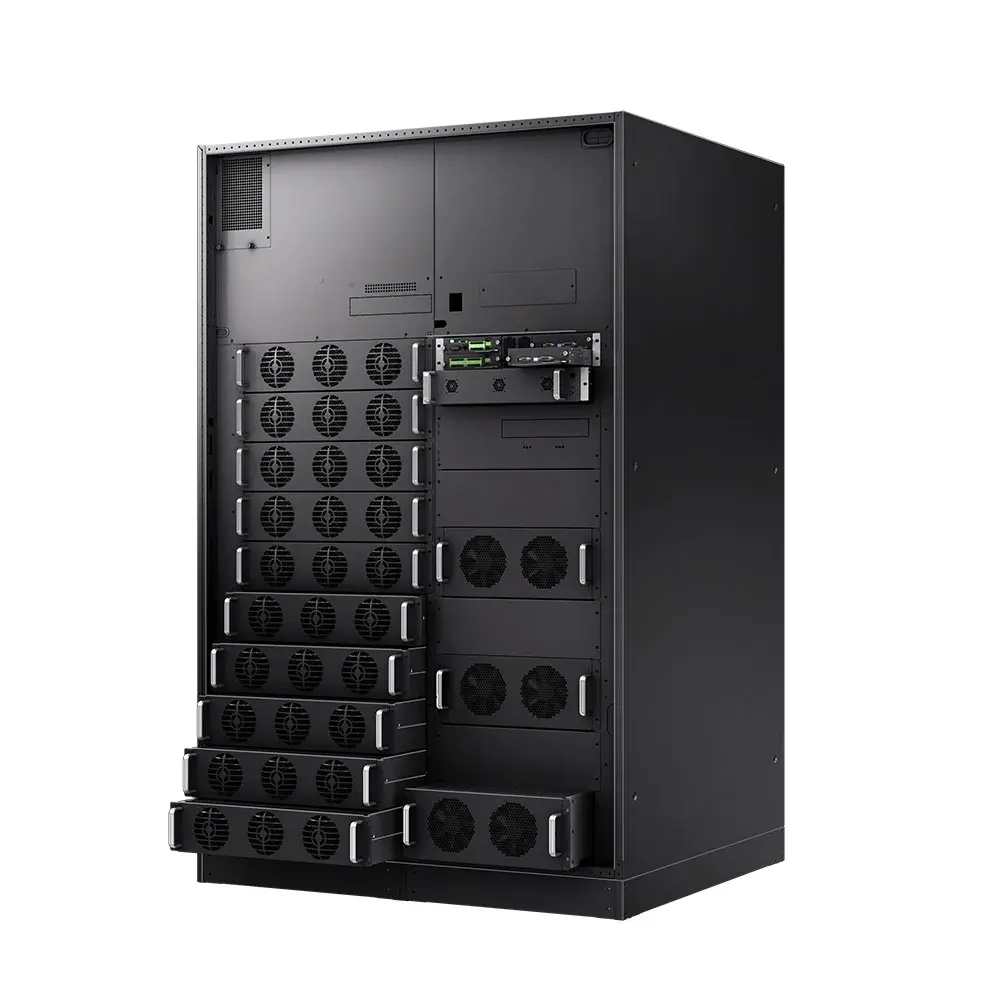
The containerized mobile AI computing center developed by Hanteng Technology in collaboration with Delta and Loongson achieves full-stack synergy and autonomy from energy to computing, with core value in three key areas. Since March 2024, Hanteng Technology, based on its own application scenarios, has completed the overall solution from product concept to technical architecture. The product incorporates Delta’s SST solid-state transformer, stepping down 10kV AC directly to 800V DC with a conversion efficiency of 98.5%, reducing PUE to 1.15 and cutting volume by 50%, providing a compact and efficient power foundation for high-density edge computing. It also features Loongson’s 3C6000 domestic CPU and AI accelerators from Taichu, Denglin, and Tianzhi, etc. Through deep joint tuning, a fully autonomous computing core has been created, ensuring stable operation under full server load and building a secure computing foundation. As the original creator and investor of this new product, Hanteng Technology is responsible for the technical architecture, standardization, investment development, and integration of complete equipment, strictly controlling quality and commissioning while balancing high reliability and rapid deployment. Full-stack hardware synergy breaks through geographical deployment limitations. Combined with flexible computing node scheduling and AI agent applications, it enables dynamic edge computing allocation, intelligent O&M, and scenario-specific computing responses, providing a mobile, secure, and adaptive one-stop computing solution for various edge scenarios.
— Wang Haoting, Chairman of Hanteng Technology
Chips are the foundation and lifeline of an autonomous computing ecosystem. Without a self-controlled CPU foundation, there can be no secure and reliable digital infrastructure. China’s computing power development must adhere to autonomous architecture, autonomous design, and autonomous ecosystem, forging a new information technology system independent of existing foreign systems. Around computing chips, Loongson has formed a full-domain layout covering general-purpose computing, AI computing, and edge computing. The 3C6000 server chip provides a solid general-purpose computing foundation for secure and stable data center construction in government clouds, finance, energy, healthcare, transportation, and other industries. Loongson is also advancing GPU chip development to create a CPU+GPU heterogeneous computing solution covering cloud inference and end-side intelligent scenarios. Relying on the LoongArch architecture and “LoongChain” interconnect technology, it supports high-performance computing and computing cluster expansion. In the future, Loongson will continue to refine its computing chip matrix, building a self-controlled, secure, efficient, and sustainably iterative domestic computing ecosystem to fundamentally safeguard national information security and digital economy development.
— Hu Weiwu, Chairman of Loongson
We are honored to join hands with Hanteng Technology and Loongson to create this containerized SST DC mobile AI computing center. Delta has fully leveraged its energy technology strengths, deeply integrating the advanced SST solid-state transformer with the HVDC power architecture to build a dedicated “power heart” for this mobile AI computing center, efficiently converting 10kV medium-voltage utility power directly to 800V DC, providing a higher-efficiency power supply solution for computing equipment. Delta’s integrated, modular design enables the entire power system to be rapidly deployed and plugged in together with the computing pod, truly realizing “power is computing power” and allowing computing to be safely and conveniently transported like a standard container to any location where it is needed and quickly put into operation.
— Gu Zhonglin, General Manager of Delta – Delta Electronics (Zhongda) Telecom & Infrastructure Business Unit
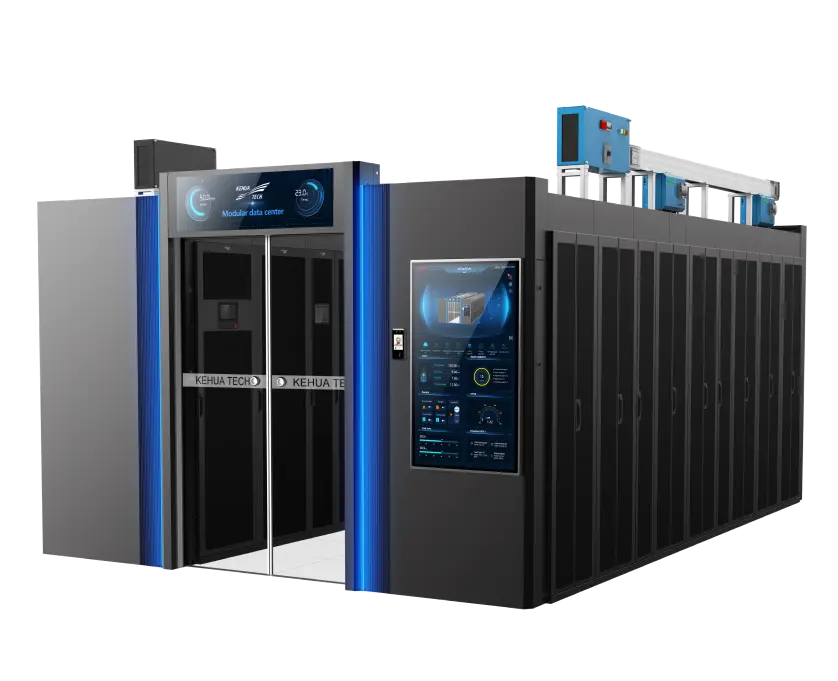
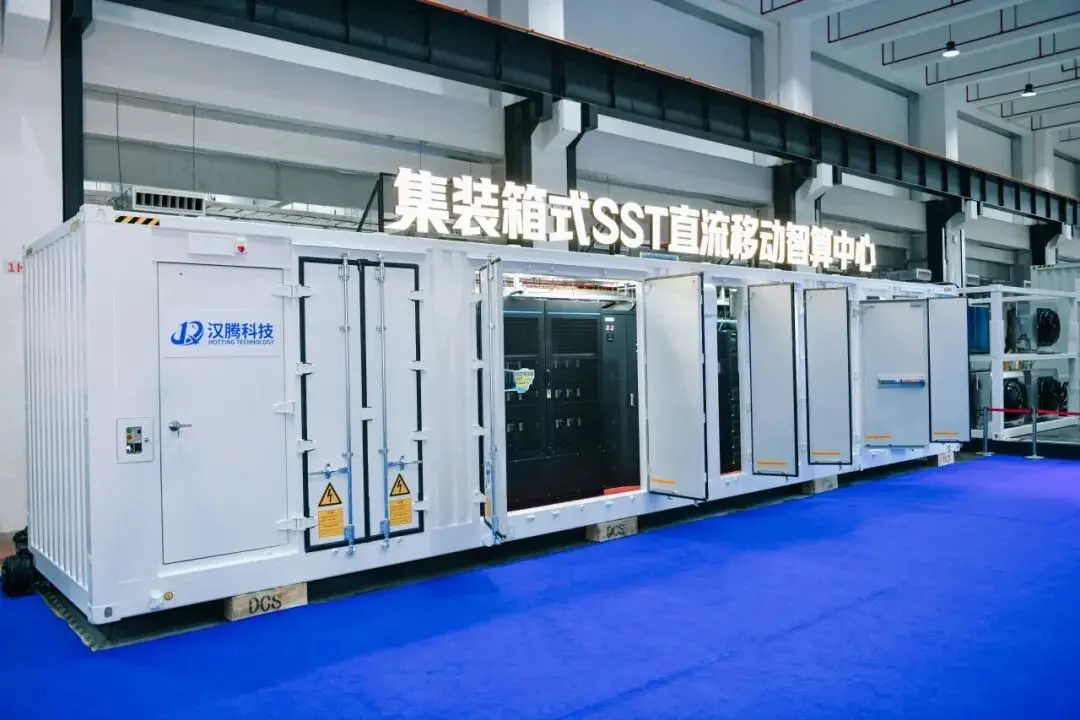
Containerized SST DC Mobile AI Computing Center
At the core computing level, the containerized SST DC mobile AI computing center uses Loongson CPUs based on the LoongArch architecture and server platforms equipped with AI accelerators from Taichu, Denglin, Tianzhi, etc. This combination handles workloads ranging from complex data analytics to AI model inference with hundreds of billions of parameters, ensuring ample and autonomous computing resources even outside traditional large-scale data center environments. At the architectural level, it uses a standard container enclosure with modular layouts for both the computing pod and the power pod. All systems are prefabricated, tested, and integrated at the factory. It can be widely applied in scenarios that are difficult for traditional fixed data centers to cover or require rapid response, such as emergency response and disaster relief, remote areas and field operations, industrial and infrastructure inspections, regional computing supplementation, and edge nodes.